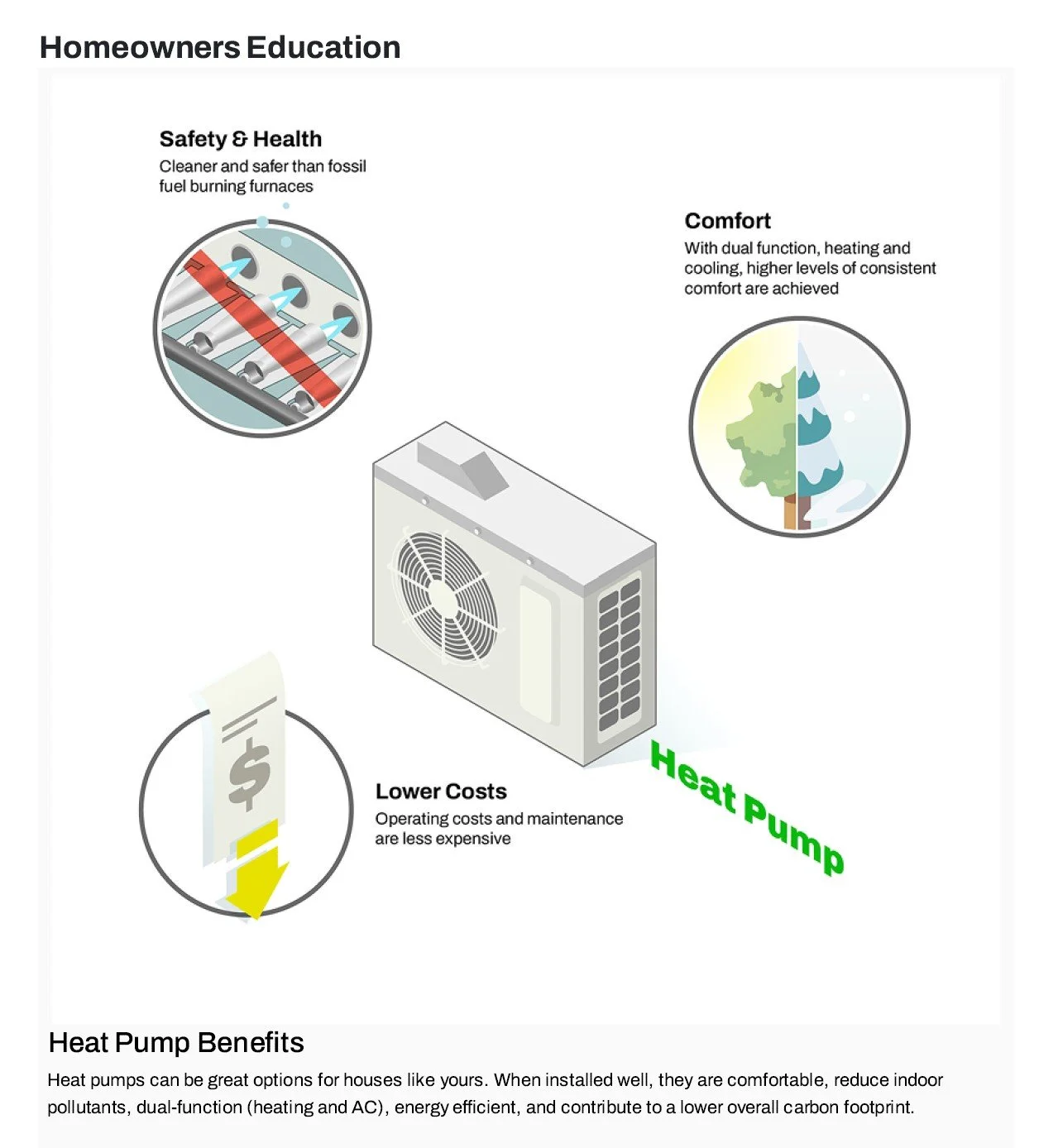
A heat pump install isn't a commodity. The same equipment in two different homes can perform completely differently depending on how the system was sized, where the indoor units land, and how tight the building envelope is. That's why we put real time into the design phase before we ever quote a price.
Here's how a project moves from your first call to a running system.
1. The first conversation
It starts with a phone call — usually 10 to 15 minutes. We'll ask about your home, your current heating setup, what's prompting the change, and what you're hoping to solve: lower bills, better cooling, getting off oil, qualifying for Mass Save, or all of the above.
If it sounds like a good fit, we schedule an in-home consultation. No charge, no obligation.
2. In-home consultation
One of the team members — comes to your home in person. This isn't a sales visit. It's a working appointment where we look at the things that actually drive system performance:
Your existing heating and cooling equipment, ductwork, and electrical service
Insulation levels, air sealing, and obvious comfort issues (cold rooms, drafty spaces)
Where indoor units could live, and how refrigerant lines would route
How you actually use the home — which rooms matter most, where you spend time, what's bothering you now
We'll also talk through your goals honestly. Sometimes the right answer is a full whole-home heat pump system. Sometimes it's a partial system paired with weatherization. Sometimes it's "fix the insulation first and we'll talk about equipment next year." We'd rather tell you that than sell you something that doesn't fit.
3. Whole-home scan with Conduit
This is the step that separates us from most contractors.
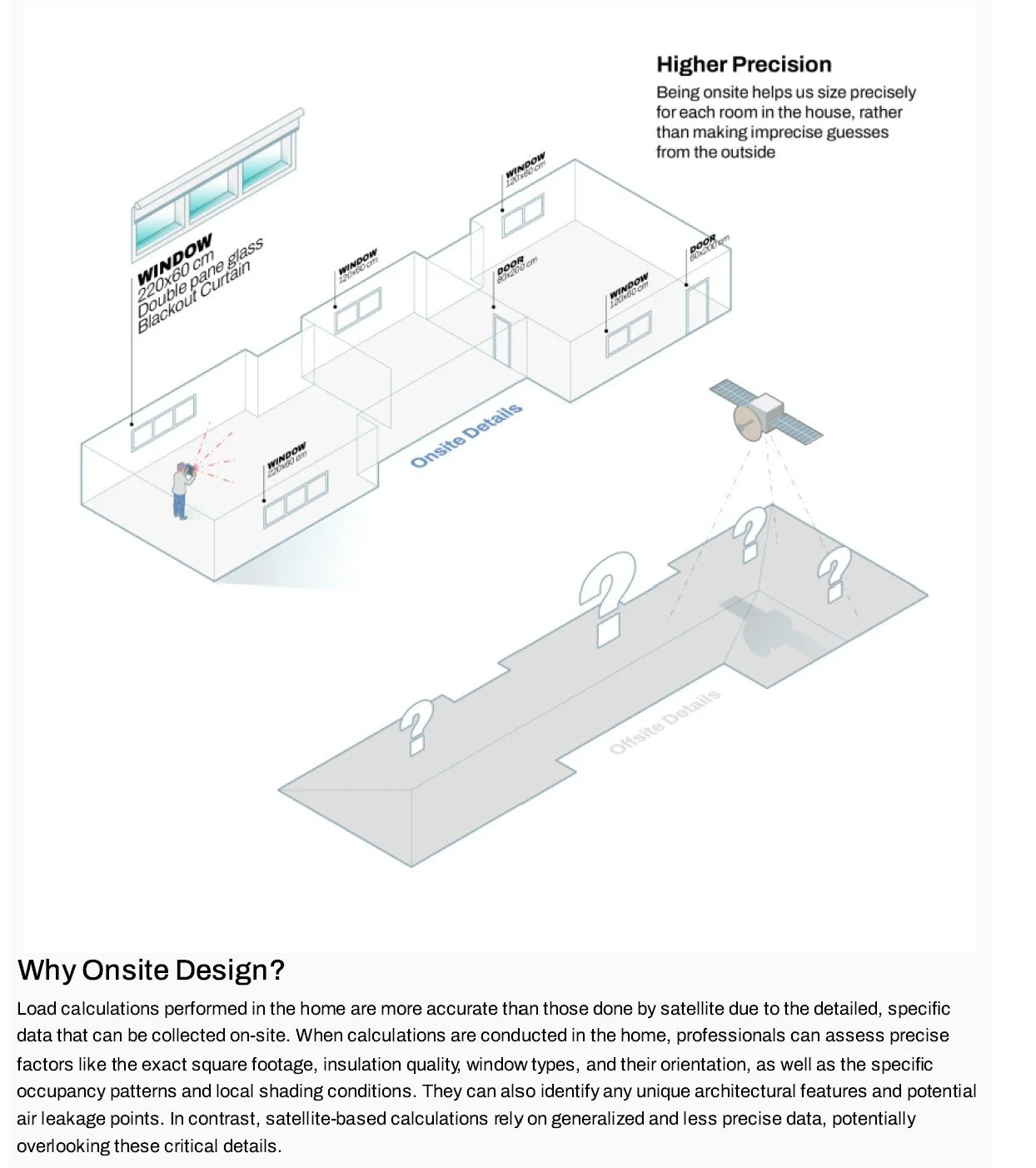
We use Conduit, a 3D home-scanning platform built specifically for heat pump design. We walk through your home with the scanner and capture an accurate digital model of every space — room dimensions, ceiling heights, window placements, and wall construction. That model feeds directly into a room-by-room Manual J load calculation, the building-science standard for sizing HVAC equipment.
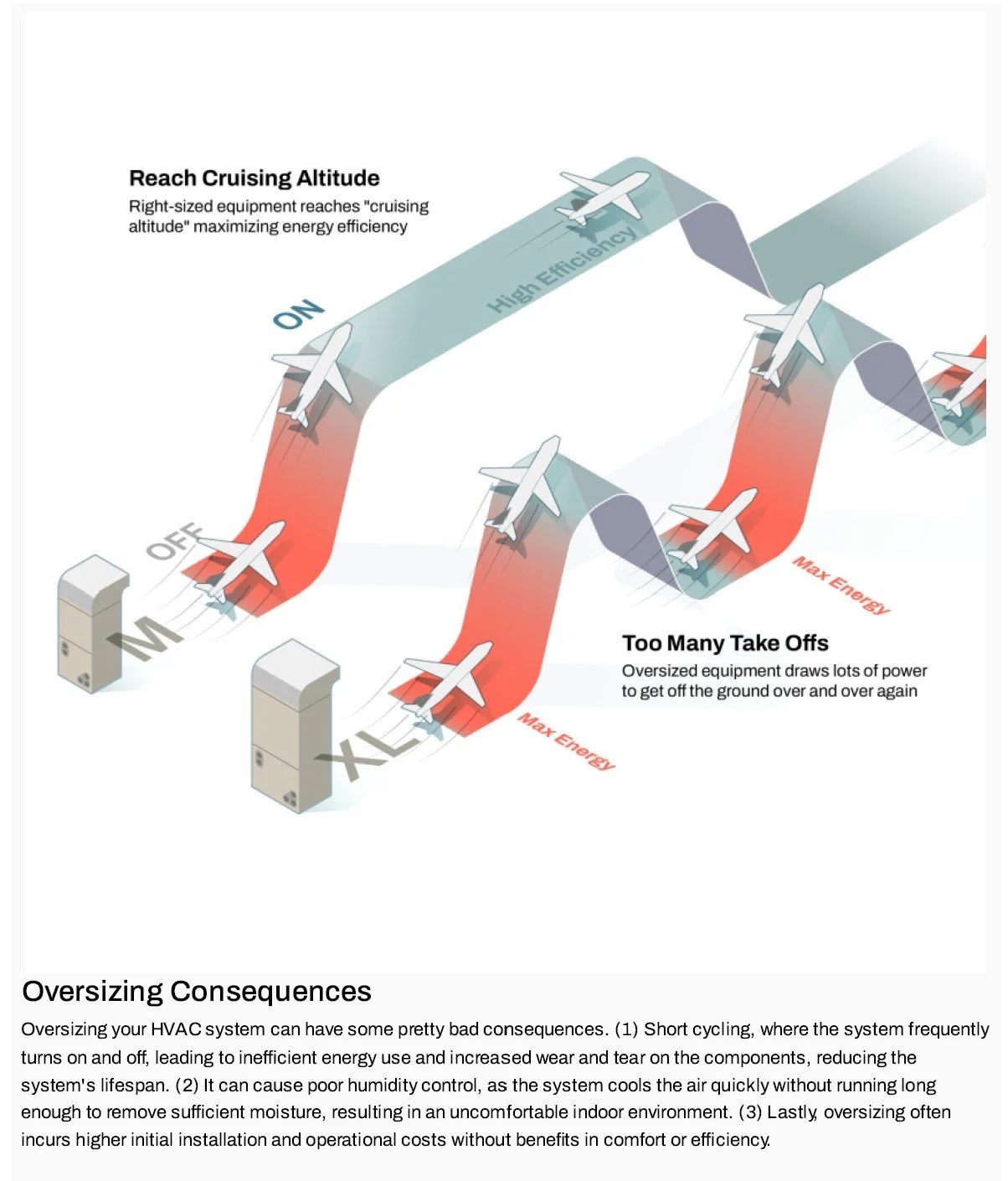
Why this matters: most heat pump installs are sized using rules of thumb ("X tons per Y square feet") that consistently produce oversized systems. Oversized heat pumps short-cycle, run inefficiently, dehumidify poorly, and cost more than they should. A proper Manual J — backed by an accurate model of your actual home — produces a system that's sized to your house, not to an average.
The scan also gives you something most homeowners never get: a clear visual of where equipment will go before anything is installed.
4. Rebate and incentive review
Once we know what the right system looks like, we map it against every incentive you qualify for:
Mass Save rebates — whole-home or partial heat pump, plus weatherization incentives
0% HEAT Loan — up to $50,000 in interest-free financing for qualifying improvements
Federal 25C tax credit — up to $2,000 for qualifying heat pump equipment
Income-eligible programs — additional incentives that cover most or all of the project cost for qualifying households
We handle the paperwork. You get the savings. We'll show you exactly what stacks, what doesn't, and what the net cost looks like after every incentive is applied.
5. Written proposal
Within a few days of the scan, we send you a written proposal with:
The recommended system, including specific equipment and where each component will be installed
A clear scope of work — electrical, refrigerant lines, condensate, controls, and any related carpentry
Pricing broken out so you can see what you're paying for
Every applicable rebate and incentive, with net cost after savings
Estimated timeline from contract to commissioning
No high-pressure close. No "today-only" pricing. Take the proposal, sit with it, ask questions. If it's the right project for both sides, we'll move forward.
6. Installation
Once you give us the go-ahead, we schedule the install — typically two to five days on site depending on system size and scope. You'll know which days we're there, who's leading the crew, and what to expect each day. We protect floors and finishes, clean up at the end of every day, and walk you through the system before we leave.
7. Commissioning and handoff
The last day of the job isn't just "turning it on." We commission the system properly — verifying refrigerant charge, airflow, control setpoints, and startup readings — and document everything. You get a packet with equipment manuals, warranty registrations, Mass Save paperwork, and our commissioning report.
We also walk you through how to actually use the system: thermostat behavior in shoulder seasons, what's normal and what's not, and how to get the most out of it.
8. Follow-up
We schedule a Year 1 check-in and a Year 2 maintenance visit as part of every install. Filters get checked, refrigerant gets verified, and we make sure the system is performing the way it was designed to. If something feels off in between, you call us — and we answer.